Generating Power On The FH Loop Versus Block
Strokes

Daniel Ring Asked 11 years ago
Hi Coaches,
My question is a little bit more technical than most of the questions you probably get, but some things have been really bugging me lately. What I would like to know is the following:
When you reach the end of your backswing on a FH loop versus block, how do you initiate the forward movement into the ball? Do you consciously PUSH against the floor with your right foot, or do you simply turn at the hips and waist (or "firing" the hips let's say) to generate the forward motion into the ball?
Also, I recently watched a video where Brian Pace made the claim that both feet should be in the air at the moment of contact on a FH loop. However, when I watch Ma Long's training video, it's pretty obvious that he keeps his feet rooted in the ground the whole time when doing a FH loop versus topspin. However, watching him play in a real match... his feet do often come off the floor when he hits the ball. I'm an intermediate player and having a hard time understanding when my feet should leave the floor when looping against topspin...

 Alois Rosario Answered 11 years ago
Hi Daniel,
Initiating the power starts from the ground and with your feet. This then pushes through your legs and waist and body. It is a summation of all of these forces to generate the speed to the ball.
I think your feet should be on the ground when looping. When players get their feet going off the ground is when they are really going after it and especially on the pivot ball when they are committing to hitting a winner. Their body is still low to the ground with their legs really well bent.
Most of the time their feet stay on the ground when playing the stroke.
Question actions
Recommended Video
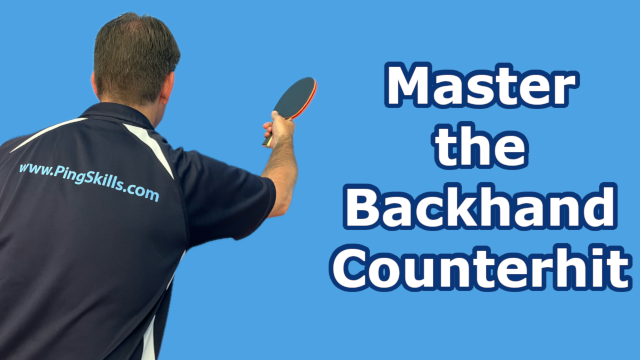
Backhand Counterhit
Welcome to our comprehensive guide on mastering the backhand counterhit, a fundamental shot that can significantly elevate your table tennis game. In this detailed tutorial, we dive deep into the three critical aspects of executing a flawless backhand counterhit:
- the feet position
- the start position
- the finish position
Not only will you learn the correct techniques, but we'll also highlight common mistakes to avoid, providing you with practical solutions to refine your skills. Whether you're a beginner looking to improve your consistency or an advanced player aiming to increase the speed of your backhand counterhits, this video is packed with valuable insights and practice tips tailored for all levels. Join us to transform your backhand counterhit into a powerful asset in your table tennis arsenal.
Watch NowNo comments yet!
Become a free member to post a comment about this question.